
Estate planning is about creating clear instructions for your loved ones. But if you've already written a will, how do you make changes without starting over? The answer may be a codicil.
As an experienced Weston estate planning attorney, I often guide clients through codicils and explain whether they are the right tool for updating an existing will.
What Is a Codicil?
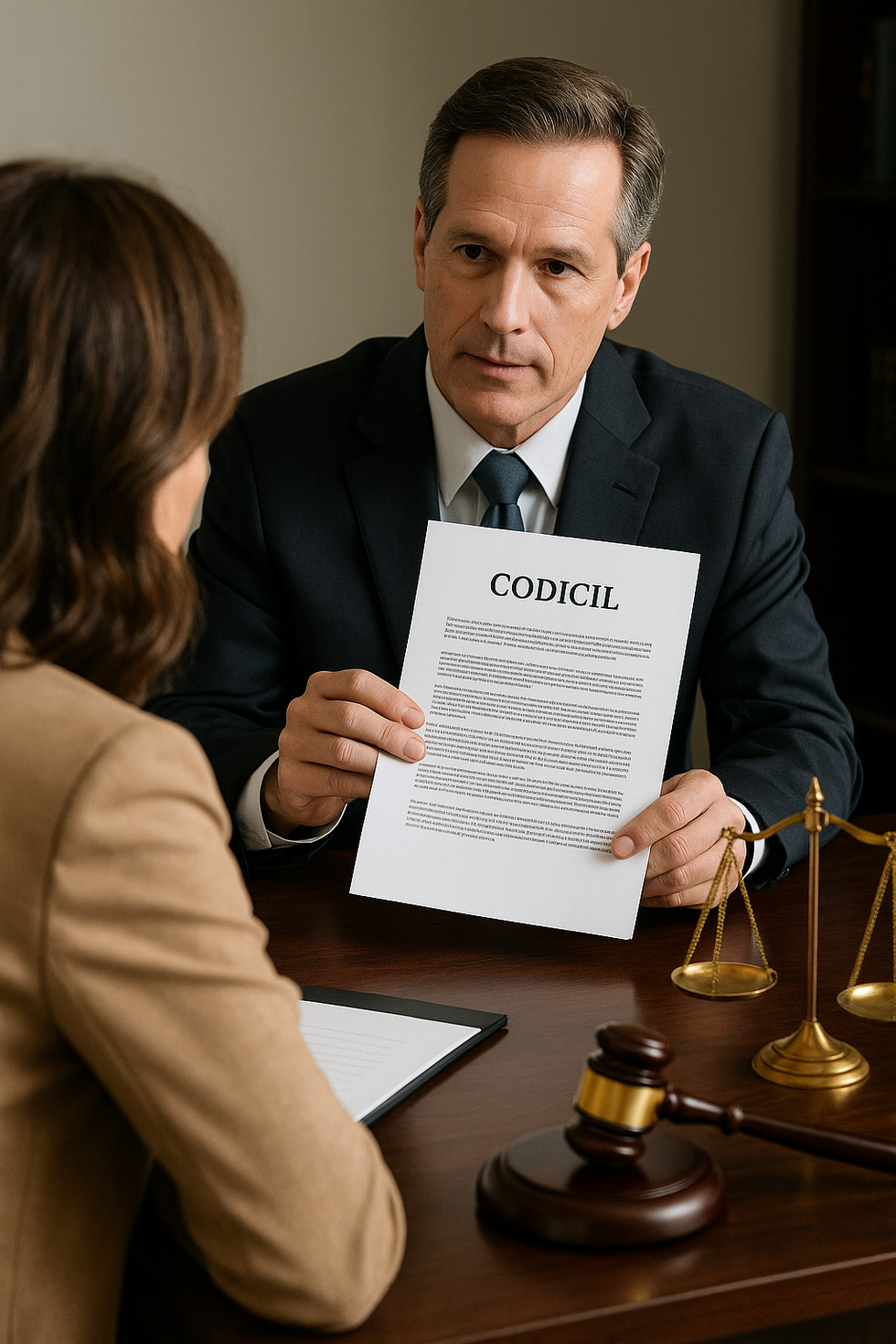
Acodicil is a legal document that modifies, amends, or revokes parts of an existing will without rewriting the entire will.
For example, codicils can:
-
Change your executor.
-
Add or remove beneficiaries.
-
Adjust specific gifts or bequests.
-
Clarify unclear terms in your will.
Think of it as an “add-on” to your will—it has the same legal force if executed properly.
Legal Requirements in Florida
To be valid, a codicil must meet the same requirements as a will in Florida:
-
It must be in writing.
-
It must be signed at the end by the person making the codicil (the testator).
-
It must be signed in the presence of two witnesses, who must also sign in each other's presence.
A notarized self-proving affidavit is not required but makes probate easier.
When to Use a Codicil
Codicils are best for minor updates, such as:
-
Naming a new executor.
-
Adding a new child or grandchild as a beneficiary.
-
Changing small gifts (like a vehicle or jewelry).
For larger or multiple changes, drafting a new will is usually safer. Multiple codicils can create confusion or contradictions.
Codicil vs. New Will
Advantages of Codicils:
-
Faster and easier to draft.
-
Convenient for small changes.
-
Legally enforceable if executed correctly.
Drawbacks:
-
Too many codicils can complicate your estate plan.
-
Risk of conflicting instructions.
-
Easier for family members to contest if unclear.
A Weston estate planning attorney can evaluate whether a codicil or new will best protects your estate.
Mistakes to Avoid
-
Handwritten codicils: Florida does not recognize holographic (handwritten, unwitnessed) wills or codicils.
-
No witnesses: Without two witnesses, the codicil is invalid.
-
Using too many codicils: Multiple amendments may confuse heirs and complicate probate.
Final Thoughts
So,what is a codicil? It's a legal document used to amend a will without replacing it entirely. While codicils are useful for small changes, bigger updates often require a new will.
Working with a Weston estate planning attorney ensures your codicil (or new will) is valid, properly executed, and reflects your true wishes. This helps protect your estate and provides clarity for your loved ones.
Disclaimer: This article is provided for informational purposes only and does not constitute legal advice. Reading this content does not create an attorney-client relationship between you and Gold Legacy Law. For legal advice regarding your personal situation, please contact our office to schedule a consultation.
