
When planning for the future, one of the most important steps you can take is ensuring your wishes are legally enforceable after your death. For many individuals, this means creating a valid Last Will and Testament. However, not all wills are legally recognized under Florida law.
One issue that frequently creates confusion is the validity of handwritten wills, commonly referred to as “holographic wills.” As a Miami Lakes trust attorney, I regularly speak with families who discover handwritten notes, letters, notebooks, or informal documents after a loved one passes away and wonder whether those writings control the estate.
Unfortunately, Florida law is very strict regarding the formalities required for a valid will.
What Is a Holographic Will?
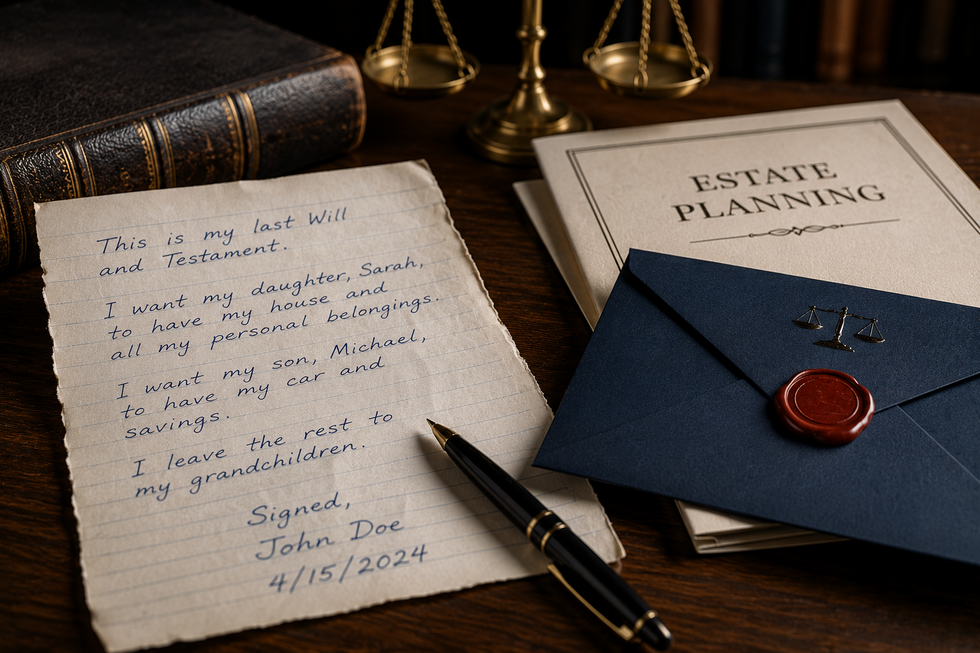
A holographic will is a handwritten will created and signed by the person making the will, known as the testator.
Unlike traditional wills, holographic wills are often created without:
- Attorneys
- Witnesses
- Formal signing ceremonies
I have seen individuals attempt to create wills on:
- Napkins
- Loose notebook paper
- Envelopes
- Handwritten letters
In some states, handwritten wills may be legally recognized if they satisfy certain requirements. Florida, however, follows a much stricter approach.
Are Handwritten Wills Valid in Florida?
Generally, no.
Under Florida Statute § 732.502, a valid Florida will must satisfy specific legal requirements.
A Florida will must:
1. Be in Writing
The will must be written in some form.
2. Be Signed
The testator must sign the will, or direct another person to sign in the testator's presence.
3. Be Properly Witnessed
The signing must occur in the presence of at least two witnesses, who must also sign the will in the presence of the testator and each other.
This witness requirement is where most handwritten wills fail under Florida law.
Even if the document is entirely handwritten, signed, and dated by the testator, it is generally not valid in Florida unless the statutory witness formalities are satisfied.
Why Does Florida Require Witnesses?
Florida's strict requirements are designed to protect families and reduce probate disputes.
Witnesses help establish:
- The authenticity of the document
- The mental capacity of the testator
- That the testator acted voluntarily
- That the will was not forged or altered
Without witnesses, probate courts face greater difficulty determining whether the document truly reflects the decedent's intentions.
Florida law prioritizes reliability and protection against fraud, undue influence, and uncertainty.
What Happens if Someone Dies With Only a Handwritten Will?
If a handwritten will does not satisfy Florida's legal requirements, the probate court may declare the will invalid.
When this occurs, the estate may instead pass according to Florida intestacy laws, meaning Florida statutes, not the handwritten document, determine who inherits the assets.
This often creates unexpected outcomes and family disputes.
For example:
- Intended beneficiaries may receive nothing
- Estranged relatives may inherit
- Probate litigation may arise among family members
Improper estate planning frequently creates unnecessary stress and expense for surviving loved ones.
What if the Handwritten Will Was Created in Another State?
This issue becomes more complicated when the handwritten will was created in another state where holographic wills are recognized.
For example, states such as Texas and California may recognize certain holographic wills if specific requirements are met.
However, Florida law specifically does not recognize holographic wills that fail to comply with Florida's witness requirements, even if they may have been enforceable elsewhere.
This creates major problems when:
- A person relocates to Florida
- Owns Florida real estate
- Dies domiciled in Florida
- Owns assets requiring Florida probate administration
Families are often surprised to learn that a document valid in another jurisdiction may not be enforceable in Florida probate court.
Common Estate Planning Red Flags
Several warning signs often lead to probate disputes involving invalid wills.
DIY Estate Planning
Online forms and handwritten documents frequently fail to comply with Florida law.
Out-of-State Documents
Estate plans created elsewhere may conflict with Florida probate requirements.
Last-Minute Changes
Sudden handwritten changes or notes often create litigation concerns.
Lack of Witnesses
Missing witness signatures are one of the most common reasons wills are challenged.
Failure to Update Estate Plans
Old or incomplete documents can create confusion regarding inheritance rights.
The Importance of Proper Estate Planning
A properly drafted estate plan is about far more than simply creating documents.
It is about ensuring that:
- Your wishes are legally enforceable
- Your loved ones avoid unnecessary disputes
- Probate complications are minimized
- Assets transfer according to your intentions
At Gold Legacy Law, PLLC, I work with families throughout Miami Lakes and South Florida to create customized estate plans that comply with Florida law and protect future generations.
Final Thoughts
Handwritten wills are generally not valid under Florida law unless they satisfy Florida's strict statutory formalities.
While handwritten notes may appear meaningful, they often create significant probate problems if they are not properly executed.
Careful estate planning with legally compliant documents can help ensure your wishes are honored while protecting your loved ones from unnecessary uncertainty and litigation.
Disclaimer: This article is provided for informational purposes only and does not constitute legal advice. Reading this content does not create an attorney-client relationship between you and Gold Legacy Law. For legal advice regarding your personal situation, please contact our office to schedule a consultation.

Comments
There are no comments for this post. Be the first and Add your Comment below.
Leave a Comment