
The digital revolution has changed how we invest, collect, and transfer wealth—and nowhere is this more apparent than with NFTs (non-fungible tokens). Whether your NFTs represent digital art, music, identity tokens, or blockchain-backed collectibles, they are real assets with real value.
But here's the problem: if no one can access your digital wallet when you die, those assets could be lost forever.
In Florida, estate planning for NFTs requires a combination of legal knowledge, secure documentation, and digital awareness. Here's what every NFT holder—and their heirs—should know.
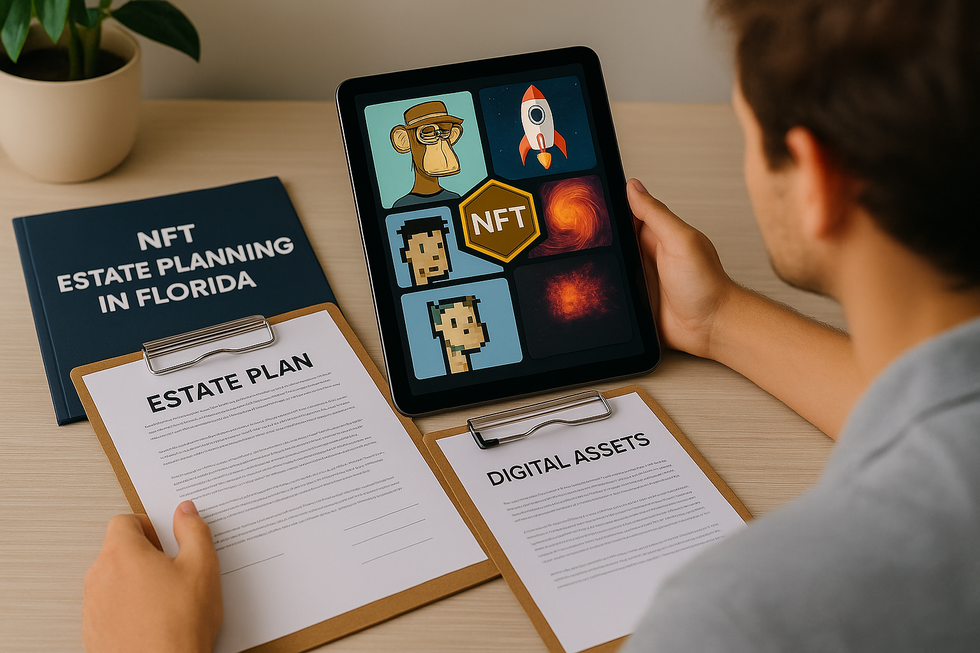
Are NFTs Considered Assets in Florida?
Yes. Under Florida law, NFTs are classified as digital assets—electronic records stored in decentralized or centralized platforms. As such, they are protected under Florida's version of the Revised Uniform Fiduciary Access to Digital Assets Act (RUFADAA).
RUFADAA allows a fiduciary (like your trustee or executor) to legally access digital property if you've:
- Explicitly given them access in your will, trust, or power of attorney
- Followed your platform's terms of service agreement (e.g., OpenSea, MetaMask)
- Provided wallet access or recovery instructions outside your documents
What Happens to NFTs When You Die?
If you don't have an estate plan, your NFTs may:
-
Become inaccessible due to lack of private keys
-
Cause tax confusion due to lack of cost basis tracking
-
Be forgotten or omitted from probate if no one knows they exist
-
Be transferred incorrectly, triggering capital gains tax or breach of terms
Because NFTs live on blockchain networks—and most aren't titled to your name—they aren't handled like traditional property.
Do You Need a Trust to Transfer NFTs?
You don't need a trust—but using one can help.
Most NFTs can't be directly retitled into a revocable trust like real estate or bank accounts. However, you can:
- Name in your trust who should be beneficiary of your NFTs
- Grant your trustee the power to manage digital assets
- Store wallet access instructions securely alongside your trust
A digital asset clause should be included in your estate planning documents—naming who has the legal right to access and manage your NFTs.
For added privacy and probate avoidance, consider using arevocable living trust with detailed language referencing your NFTs, wallets, and custodian platforms.
Best Practices for NFT Estate Planning in Florida
Here's how to make sure your digital assets are secure and transferable:
1. Create a Digital Asset Inventory
List all NFTs, platforms (e.g., OpenSea, Magic Eden), wallet addresses, and the blockchain they're stored on.
2. Secure Wallet Access
Store private keys, seed phrases, or hardware wallets in a secure location like a fireproof safe or encrypted cloud. Make sure someone you trust knows how to access them.
3. Update Your Estate Documents
Add digital asset language to your will, trust, and durable power of attorney. Specify who can access your digital property and under what conditions.
4. Track Valuation & Cost Basis
Keep records of NFT purchase price, gas fees, and valuation at the date of death. This helps heirs report capital gains correctly.
5. Talk to an Attorney Who Understands Web3
Not all estate planners are familiar with NFTs or crypto wallets. Choose someone with experience handling blockchain-based assets.
Final Thoughts: Protect Your Digital Legacy
If you've invested in NFTs, you've invested in the future. But without an estate plan, your digital legacy could disappear forever.
At Gold Legacy Law, we help Florida families plan for the assets of tomorrow—including cryptocurrency, NFTs, and metaverse property. Whether you're a digital native or just getting started with Web3, we'll help you protect what you've built.
Schedule a consultation today to add your NFTs to your estate plan—and ensure your heirs get what you intended.
Disclaimer: This article is provided for informational purposes only and does not constitute legal advice. Reading this content does not create an attorney-client relationship between you and Gold Legacy Law. For legal advice regarding your personal situation, please contact our office to schedule a consultation.
