
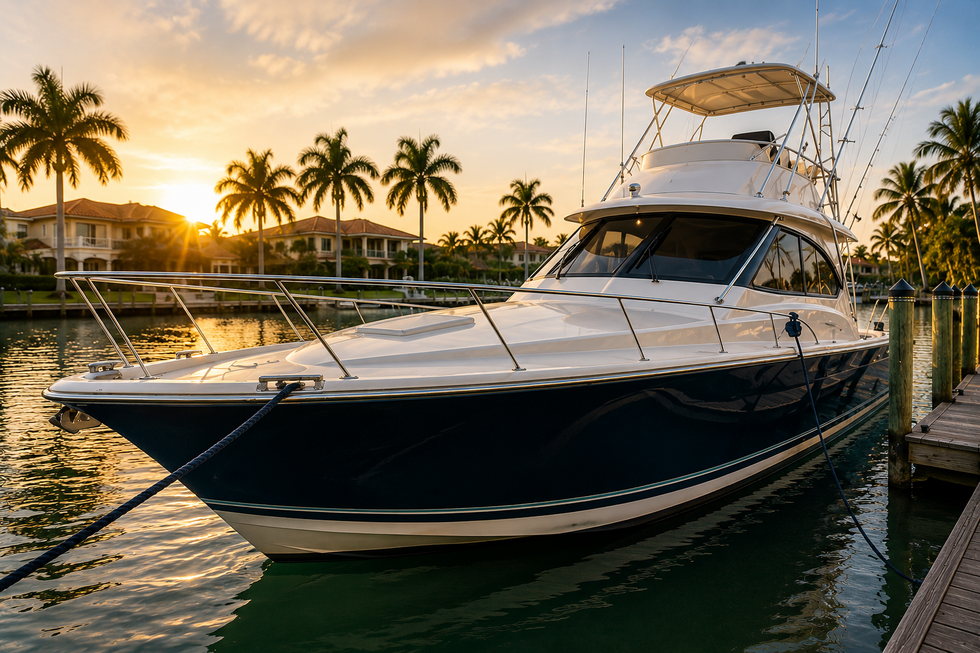
Florida's boating lifestyle is one of the many reasons people choose to live and retire here. Whether you own a fishing vessel, sailboat, yacht, or recreational watercraft, your boat is likely one of your most valuable personal assets.
Unfortunately, many Florida boat owners fail to consider what happens to their vessel after death or if they become involved in a lawsuit. Without proper planning, your boat may become subject to probate administration, creditor claims, or unnecessary legal expenses.
As a Miami Lakes estate planning attorney, I often help clients develop strategies that both avoid probate and provide additional asset protection for valuable property such as boats.
Why Avoid Probate for a Boat in Florida?
Probate is the court-supervised process used to administer and distribute assets after death. If a boat is titled solely in your individual name and no probate-avoidance planning exists, your heirs may be required to open a probate administration before ownership can be transferred.
This can create several problems:
- Probate delays that may last months or longer
- Attorney and administrative expenses
- Public court records
- Potential disputes among beneficiaries
- Difficulty accessing or selling the vessel
Proper planning can help your family avoid these complications.
Option 1: Transfer the Boat into a Revocable Living Trust
One of the most effective ways to avoid probate is by transferring ownership of the boat into a revocable living trust.
A revocable trust allows you to:
- Maintain complete control during your lifetime
- Avoid probate upon death
- Keep transfers private
- Simplify administration for your beneficiaries
Because the trust owns the boat rather than you individually, the vessel generally does not become part of your probate estate.
For many Florida families, a revocable trust serves as the foundation of an effective estate plan.
Option 2: Joint Ownership with Rights of Survivorship
Another option may involve titling the boat jointly with another owner and including survivorship rights.
Under a properly structured survivorship arrangement, ownership automatically transfers to the surviving owner upon death.
This approach may work well for:
- Married couples
- Long-term partners
- Certain family members
However, joint ownership may expose the boat to the co-owner's creditors, lawsuits, divorce proceedings, or financial difficulties. Careful analysis is important before selecting this strategy.
Can You Use a Transfer-on-Death Designation for a Florida Boat?
Currently, Florida does not provide a transfer-on-death registration system for boats similar to those available in some other states.
As a result, Florida boat owners typically rely upon trusts, joint ownership arrangements, or business entities to accomplish probate avoidance.
How to Protect Your Boat from Creditors
Avoiding probate and protecting assets are two separate goals.
While a trust may help avoid probate, it does not automatically protect your boat from creditor claims.
Forming an LLC for Boat Ownership
Many Florida boat owners choose to place their vessel into a Florida Limited Liability Company (LLC).
Potential benefits include:
- Liability protection
- Separation of personal and business assets
- Improved asset management
- Additional privacy
If someone sues the LLC, your personal assets may receive additional protection. Likewise, if you are sued individually, Florida's charging order protections may provide important safeguards for LLC interests.
This strategy can be particularly beneficial when:
- The boat has substantial value
- The boat is rented or chartered
- The vessel is used frequently
- Liability exposure is a concern
Combining an LLC and Revocable Trust
For many Florida boat owners, the most effective strategy combines both probate avoidance and asset protection.
This often involves:
- Titling the boat in an LLC.
- Transferring ownership of the LLC membership interest to a revocable living trust.
This structure may provide:
- Probate avoidance
- Simplified succession planning
- Additional liability protection
- Greater privacy
Many sophisticated estate plans utilize this combination.
Can a Boat Qualify for Florida Homestead Protection?
No.
Florida's homestead protections apply only to qualifying real property used as a permanent residence.
Even if someone lives aboard a vessel, the boat itself generally does not qualify for Florida constitutional homestead protection.
As a result, boats titled individually are generally vulnerable to creditor claims.
Additionally, if you are operating the vessel and become involved in an accident, you may still face personal liability exposure as the operator.
Is an LLC Necessary for Every Boat Owner?
Not necessarily.
For smaller recreational boats, the costs and administrative requirements of an LLC may outweigh the benefits.
However, LLC ownership is often worth considering when:
- The boat has significant value
- The vessel is used commercially
- Multiple owners are involved
- Asset protection is a priority
Each situation should be evaluated individually.
Final Thoughts
Florida boat ownership comes with unique estate planning and liability considerations.
The most effective plans often combine probate avoidance strategies with asset protection techniques to safeguard both the vessel and your family.
At Gold Legacy Law, PLLC, I work with individuals and families throughout Miami Lakes and South Florida to create customized estate planning solutions involving trusts, LLCs, asset protection planning, and probate avoidance strategies.
Proper planning today can help ensure your boat remains protected and transfers efficiently to the next generation.
Disclaimer: This article is provided for informational purposes only and does not constitute legal advice. Reading this content does not create an attorney-client relationship between you and Gold Legacy Law. For legal advice regarding your personal situation, please contact our office to schedule a consultation.

Comments
There are no comments for this post. Be the first and Add your Comment below.
Leave a Comment