
One of the most common questions I receive as a Miami Lakes estate planning attorney is:
“How do I make sure certain items go to certain family members?”
For many families, estate planning is not just about money or investments. Some of the most emotionally significant assets are personal items such as jewelry, family heirlooms, photographs, collectibles, artwork, firearms, business interests, or even cryptocurrency wallets.
Unfortunately, when these wishes are not properly documented, disagreements among family members can quickly arise during probate administration.
Careful estate planning can help ensure that your wishes are honored while minimizing future disputes among your loved ones.
Why Specific Gifts Matter
In many estates, personal property carries substantial emotional value.
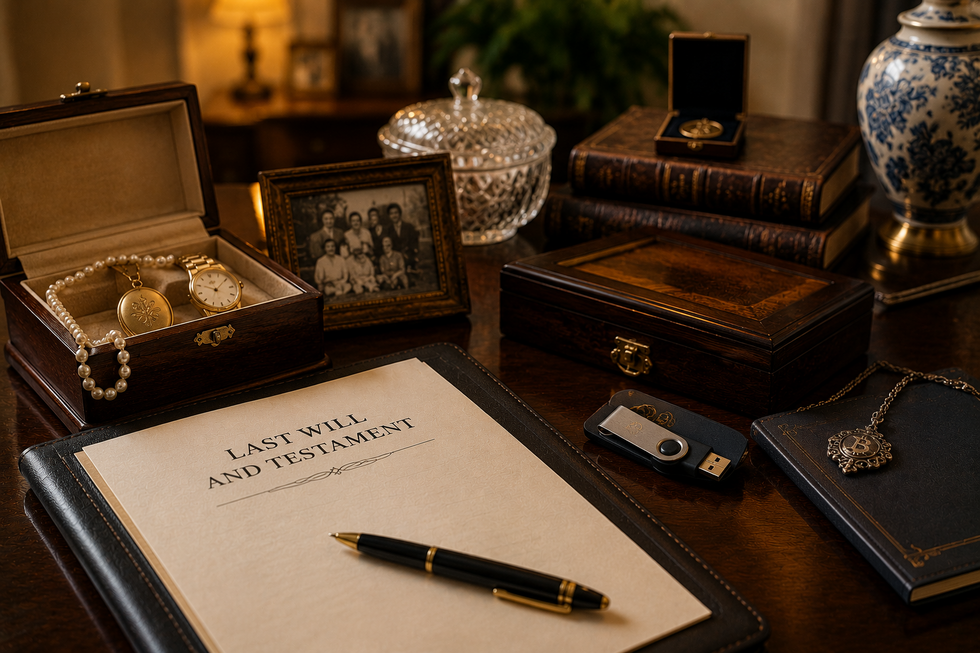
These may include:
- Wedding rings
- Family heirlooms
- Watches or jewelry
- Antiques
- Firearms or collectibles
- Vehicles
- Artwork
- Cryptocurrency hardware wallets
- Sentimental family keepsakes
Even relatively small items can become major sources of conflict if multiple heirs believe they were promised the same property.
Can I Leave Specific Items in My Florida Will?
Yes.
Under Florida law, a Last Will and Testament can specifically identify assets and designate who should inherit them.
These are often called “specific bequests.”
For example, a will may state:
- “My daughter shall receive my engagement ring.”
- “My son shall receive my coin collection.”
- “My nephew shall receive my vehicle.”
Specific gifts allow you to clearly identify both the property and intended beneficiary.
What Is a Personal Property Memorandum?
Florida law may also allow a separate written memorandum that identifies certain tangible personal property and who should receive it.
This can be useful for items such as:
- Furniture
- Jewelry
- Artwork
- Collectibles
- Household items
A personal property memorandum provides flexibility because it can often be updated without completely rewriting the will.
However, these memorandums should be carefully prepared to avoid ambiguity or conflicts with the overall estate plan.
What Happens if Items Are Not Specifically Addressed?
If your estate plan does not clearly identify who receives certain items, disputes frequently arise during probate.
Common probate conflicts include:
- Multiple heirs claiming the same item
- Family members relying on verbal promises
- Disagreements regarding sentimental property
- Questions involving missing assets
When intentions are unclear, the personal representative may be forced to make difficult decisions that create family tension.
Should Real Estate Be Specifically Gifted?
Possibly.
Florida real estate, especially homestead property, requires careful planning.
Specific issues may involve:
- Homestead restrictions
- Rights of surviving spouses
- Minor children
- Probate administration
- Title concerns
Improperly gifting Florida real estate can unintentionally create legal complications or disputes among beneficiaries.
This is especially important for families with blended family dynamics or multiple heirs.
What About Cryptocurrency and Digital Assets?
Today, many individuals also own valuable digital assets.
These may include:
- Bitcoin
- Cryptocurrency wallets
- NFTs
- Online financial accounts
- Digital businesses
- Social media accounts
Without proper estate planning, beneficiaries may not even know these assets exist, much less how to access them.
Digital asset planning should include:
- Clear ownership instructions
- Secure access procedures
- Private key management
- Coordination with trusts and probate documents
Failing to properly organize digital assets can result in permanent loss of access.
Can a Trust Help Distribute Specific Assets?
Yes.
Revocable living trusts are often excellent tools for distributing specific property because they can provide:
- Greater privacy
- Probate avoidance for certain assets
- Detailed distribution instructions
- Long-term management of inherited assets
- Protection for younger beneficiaries
Trusts are particularly useful when families want greater control over how assets are distributed after death.
Common Estate Planning Mistakes
Several mistakes frequently create inheritance disputes involving personal property.
1. Verbal Promises
Oral statements often create confusion and are difficult to prove.
2. DIY Estate Planning
Generic online forms frequently fail to address Florida-specific probate and homestead issues.
3. Failing to Update Documents
Estate plans should evolve with family and financial changes.
4. Unclear Descriptions
Vague wording can create uncertainty regarding which asset was intended.
5. Ignoring Digital Assets
Many estate plans fail to address cryptocurrency and online accounts altogether.
The Importance of Proper Planning
Estate planning is about more than distributing assets — it is about protecting family relationships and ensuring your wishes are carried out properly.
At Gold Legacy Law, PLLC, I work with individuals and families throughout Miami Lakes and South Florida to create customized estate plans that address personal property, homestead planning, trusts, digital assets, and long-term family goals.
Careful planning today can significantly reduce future probate disputes and uncertainty for your loved ones.
Final Thoughts
If you want specific items to go to specific heirs, the most important step is making sure your wishes are legally documented and properly coordinated with your overall estate plan.
Whether it involves family heirlooms, real estate, jewelry, or digital assets, thoughtful planning can help ensure your loved ones receive the assets you intended while minimizing future conflict.

Comments
There are no comments for this post. Be the first and Add your Comment below.
Leave a Comment