
Firearms are personal property, but they are not always as simple to transfer at death as jewelry, furniture, or an ordinary bank account.
A Florida firearm owner should consider not only who should inherit the firearms, but also:
-
Whether the beneficiary can legally possess them
-
Whether the firearms will pass through probate
-
Whether any firearm is subject to specialized federal or Florida law
-
Who should have custody during estate administration
-
Whether a Trust is appropriate
-
Whether valuable collections should be appraised
-
Whether an out-of-state beneficiary creates additional legal issues
-
Whether the estate plan still matches current firearm law
These questions have become particularly important in 2026 because federal treatment of several categories traditionally regulated under the National Firearms Act has changed substantially.
For firearm owners, the estate plan should therefore identify the property, identify the intended recipient, and provide a lawful framework for administration and transfer.
Gold Legacy Law provides estate-planning guidance concerning firearms but does not prepare NFA Gun Trusts.
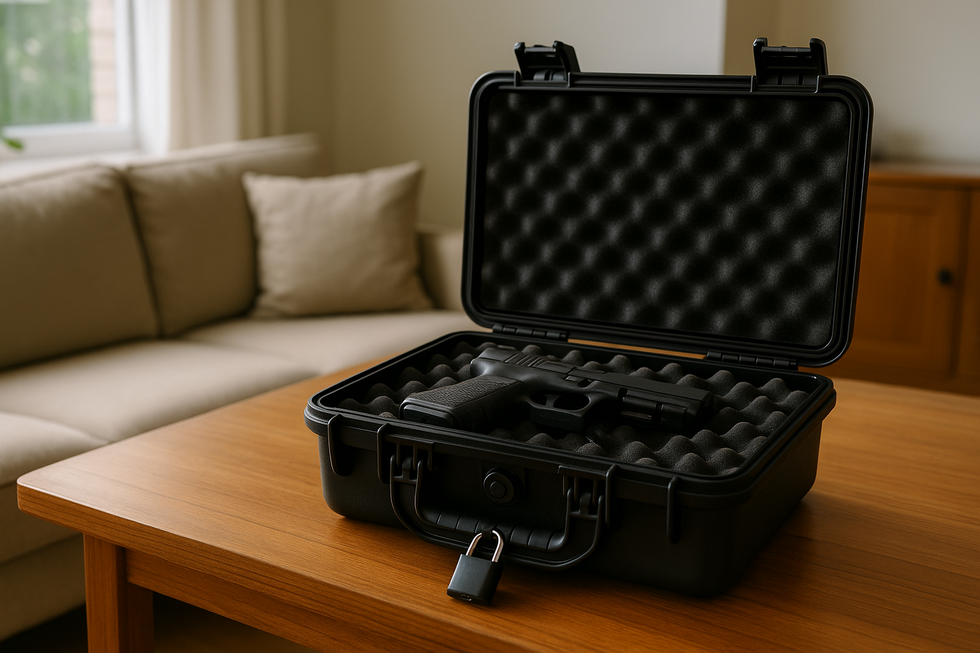
Can Firearms Be Inherited in Florida?
Generally, yes.
Lawfully owned firearms are personal property and can potentially pass to beneficiaries through:
-
A Last Will and Testament
-
A Trust
-
Intestate succession if there is no valid Will
-
Other legally effective ownership arrangements
But the fact that someone is entitled to inherit property does not necessarily mean that person may legally possess every firearm.
Federal and Florida law restrict firearm possession by certain people.
For example, Florida Statute § 790.23 prohibits firearm possession by various categories of convicted felons and certain other persons unless applicable rights have been restored.
A personal representative or trustee administering firearms should therefore avoid assuming:
“The Will leaves the collection to this person, so I can simply hand it over.”
The beneficiary's legal eligibility and the classification of the firearm should be evaluated first.
Do Firearms Go Through Probate in Florida?
They can.
If a deceased Florida resident individually owned firearms and those firearms were not held through another valid ownership structure, they may become part of the probate estate.
The personal representative then has responsibility for administering those assets as part of the estate.
That may involve:
-
Identifying the firearms
-
Securing them
-
Determining ownership
-
Establishing value
-
Identifying the appropriate beneficiary
-
Confirming that the recipient may lawfully possess them
-
Complying with any applicable state or federal transfer requirements
For a broader explanation of estate administration, see our Florida Probate Attorneys page and Florida Probate FAQs.
Who Controls the Firearms During Probate?
Once appointed, the Florida personal representative is responsible for protecting and administering estate assets.
That can create a sensitive issue with firearms.
Family members should generally not begin dividing up or removing estate firearms simply because they believe they will eventually inherit them.
The personal representative should first determine:
-
What firearms belonged to the decedent
-
Whether they are ordinary firearms or specially regulated items
-
Whether they are lawfully possessed
-
Whether the proposed beneficiary is legally eligible
-
Whether applicable transfer rules must be satisfied
A firearm collection can also have substantial financial value.
Rare, historic, collectible, or customized firearms may require professional valuation rather than being treated as ordinary household property.
What Happens if a Beneficiary Cannot Legally Possess a Firearm?
This issue should be addressed before distribution.
A Will does not override criminal law.
If an intended beneficiary is prohibited from possessing firearms, the personal representative should obtain appropriate legal guidance regarding disposition of the property rather than transferring physical possession.
Depending on the circumstances and governing estate documents, alternatives might involve lawful sale or another legally permitted disposition.
The estate plan itself can also include backup beneficiaries or instructions addressing what happens if the intended recipient cannot lawfully receive particular property.
Why Firearms Need Special Estate-Planning Attention
Firearm planning involves two different questions:
Who owns the property?
and
Who may legally possess the property?
With most estate assets, those questions are largely the same.
With firearms, they may not be.
An individual might inherit an ownership interest while still being prohibited from physically possessing a particular firearm.
A properly designed estate plan should therefore avoid treating a firearm collection as though it were no different from furniture or artwork.
What Are NFA Firearms?
The federal National Firearms Act historically imposed specialized registration, taxation, and transfer rules on categories including:
-
Machine guns
-
Destructive devices
-
Suppressors or silencers
-
Short-barreled rifles
-
Short-barreled shotguns
-
Certain “any other weapons,” commonly referred to as AOWs
However, the federal rules changed dramatically in 2026.
Important 2026 Federal NFA Change
The One Big Beautiful Bill Act reduced federal making and transfer taxes to $0 for suppressors, short-barreled rifles, short-barreled shotguns, and AOWs.
Then, following federal litigation, ATF announced on October 9, 2026 that it would cease enforcement of several NFA registration, prior-approval, and related provisions nationwide for those zero-tax categories.
As of the date of this article, ATF states that it will not enforce the traditional NFA prior-approval and registration requirements for:
-
Suppressors
-
Short-barreled rifles
-
Short-barreled shotguns
-
AOWs
However:
Machine guns and destructive devices remain subject to the NFA's full requirements and $200 tax.
Federal Gun Control Act requirements also remain applicable, and ATF expressly cautions that state and local law may impose additional restrictions.
This is a rapidly evolving area.
Anyone administering an estate containing these items should verify the law and current ATF guidance at the time of the transfer rather than relying on older estate-planning articles or forms.
Florida Law Still Matters
Federal nonenforcement does not automatically eliminate Florida law.
Florida Statute § 790.221 addresses possession of:
-
Short-barreled rifles
-
Short-barreled shotguns
-
Machine guns
The statute generally prohibits possession but contains an exception for firearms that are lawfully owned and possessed under federal law.
Because federal law and ATF's enforcement position changed in October 2026, the interaction between current federal treatment and Florida's statute deserves careful review.
This is exactly why older statements such as:
“Suppressors and short-barreled rifles always require ATF approval before inheritance”
should no longer be repeated without qualification.
What Happens to a Machine Gun or Destructive Device After Death?
Machine guns and destructive devices remain subject to the NFA's traditional requirements.
ATF has historically allowed registered NFA firearms in an estate to be transferred tax-free to a lawful heir through the applicable federal estate-transfer process.
A “lawful heir” can include a person named in the decedent's Will or, when there is no Will, a person entitled to inherit under applicable state intestacy law.
The estate should not assume that ordinary probate distribution procedures alone are sufficient for a federally regulated item.
Current ATF requirements should be confirmed before possession or transfer changes.
What if an Estate Contains an Unlawfully Possessed or Unregistered Item?
This is an area where a personal representative should obtain legal advice immediately.
The personal representative should not:
-
Give the item to a beneficiary
-
Attempt to sell it informally
-
Transfer it to a friend
-
Assume probate ownership cures a registration or possession problem
Older ATF guidance has treated certain unregistered NFA firearms as contraband that cannot simply be registered by the estate after death.
Because the 2026 federal changes affect some categories but not others, the current classification and current law should be confirmed before any action is taken.
What Is a Florida Gun Trust?
A gun trust is a Trust specifically drafted to address firearm ownership, management, possession, and succession.
Gun trusts historically have been used particularly with firearms regulated under the NFA.
A properly designed firearm Trust can address matters such as:
-
Who may serve as trustee
-
Who may lawfully possess Trust property
-
What happens when a trustee becomes ineligible
-
How firearms should be administered after death
-
How property should ultimately pass to beneficiaries
-
What happens if a beneficiary is prohibited from possession
-
How the Trust should respond to future changes in firearm law
A generic Revocable Living Trust is not necessarily the same thing as a firearm-specific Trust.
For a more detailed comparison, see Gun Trust vs. LLC for Firearm Ownership in Florida.
Does Every Florida Gun Owner Need a Gun Trust?
No.
That statement would be too broad.
A person who owns ordinary firearms and has a straightforward estate may be able to address them through a properly designed Will or general estate plan.
A specialized firearm Trust may deserve consideration when the owner:
-
Owns specialized or regulated firearms
-
Has a substantial collection
-
Wants multiple people involved in lawful possession or management
-
Wants detailed succession rules
-
Has beneficiaries with different legal eligibility
-
Wants the firearms managed separately from other estate property
The appropriate structure depends on the property and the owner's goals.
Can a Regular Revocable Living Trust Own Firearms?
Potentially, but that does not mean a standard estate-planning Trust is automatically suitable for every firearm.
A typical Revocable Living Trust is designed primarily for:
-
Probate avoidance
-
Incapacity planning
-
Asset management
-
Beneficiary distributions
It usually is not drafted around detailed firearm-specific possession or compliance rules.
If firearms are intentionally transferred to a general Trust, the Trust terms, trustee eligibility, current federal law, Florida law, and practical possession issues should be evaluated.
Can a Gun Trust Avoid Probate?
Trust-owned property generally does not require probate solely to transfer title because of the owner's death.
That can make Trust ownership useful for certain firearm collections.
But probate avoidance alone does not answer the compliance question.
The trustee must still administer the Trust property lawfully.
A Trust does not authorize someone who is legally prohibited from possessing firearms to possess them.
For additional probate planning considerations, see Avoiding Probate Issues With Firearms in Florida.
Who Should Be Trustee of a Firearm Trust?
Trustee selection matters because the trustee may have legal control over firearms owned by the Trust.
A trustee should be:
-
Legally eligible to possess the firearms involved
-
Responsible
-
Familiar with the Trust's requirements
-
Willing to follow changes in applicable law
-
Capable of administering valuable property
-
Able to coordinate with beneficiaries and professionals
The fact that someone is a trusted family member does not automatically mean that person is the correct trustee.
See Who Should Not Be a Trustee of a Gun Trust for additional considerations.
Can Firearms Be Left to Minor Children?
A minor beneficiary can create obvious practical and legal problems.
Rather than directing physical possession of firearms to a minor, estate planning should consider how ownership will be held and managed until the beneficiary is legally eligible and sufficiently mature.
A Trust can sometimes provide a structure under which a trustee manages property until specified conditions are satisfied.
Firearm-specific legal restrictions still apply.
What if the Beneficiary Lives in Another State?
Interstate transfers deserve additional attention.
The receiving state's firearm laws may differ significantly from Florida law.
Federal law may also regulate interstate transfers depending on the firearm and circumstances.
A Florida estate plan should therefore avoid assuming that a firearm lawfully owned in Florida can automatically be delivered to an heir in another state.
The personal representative or trustee should confirm the applicable law before transferring possession.
Should a Firearm Collection Be Specifically Listed in the Will?
Sometimes, but there are privacy considerations.
A Will admitted to Florida probate generally becomes part of the public court record.
Someone with a valuable firearm collection may not want a detailed inventory of every firearm written directly into the Will itself.
Possible estate-planning approaches may instead distinguish between:
-
The legal document governing disposition
-
Separate private records identifying individual firearms
-
Trust-owned property
-
Estate inventory requirements during probate
The appropriate solution depends on the estate plan and the type of firearms involved.
Keep a Private Firearm Inventory
A firearm owner should consider maintaining a secure inventory containing information needed by the future fiduciary.
Depending on the collection, records might include:
-
Manufacturer
-
Model
-
Serial number
-
Ownership records
-
Purchase documentation
-
Appraisals
-
Trust ownership information
-
Relevant federal documentation
-
Location
-
Insurance information
This information should be stored securely.
The goal is to make administration possible after death without unnecessarily exposing sensitive information during life.
Estate Planning Mistakes Florida Firearm Owners Should Avoid
Assuming the Will Overrides Firearm Law
It does not.
An inheritance provision does not authorize illegal possession.
Letting Family Members Divide the Collection Immediately
Possession and ownership issues should be reviewed before distribution.
Using Outdated NFA Information
Federal rules changed materially in October 2026.
Older internet articles may now describe requirements ATF says it is no longer enforcing for several categories.
Assuming a Gun Trust Solves Everything
A Trust is an ownership and estate-planning structure.
It does not exempt trustees or beneficiaries from applicable law.
Naming an Ineligible Trustee or Beneficiary
Eligibility should be considered when the estate plan is created, not discovered after death.
Ignoring State Law
Federal rules are only part of the analysis.
Florida law and the law of another beneficiary's state may also matter.
Using a Generic Trust Template
A generic estate-planning Trust may not address firearm-specific ownership, possession, trustee eligibility, or changes in applicable law.
Firearm Estate Planning Checklist
Florida firearm owners should consider reviewing:
-
What firearms do I own?
-
Which items are ordinary firearms?
-
Are any subject to specialized federal or Florida rules?
-
How is each item legally owned?
-
Who should inherit each firearm or collection?
-
Can those beneficiaries lawfully possess them?
-
What happens if a beneficiary becomes prohibited?
-
Does anyone live outside Florida?
-
Who should manage the property if I become incapacitated?
-
Who should control the firearms after my death?
-
Is probate avoidance important?
-
Is a firearm-specific Trust appropriate?
-
Does my existing Trust actually address firearms?
-
Is my private firearm inventory current?
-
Have federal or Florida laws changed since my estate plan was signed?
Because firearm law can change quickly, this portion of an estate plan should be reviewed periodically.
Frequently Asked Questions About Firearms and Florida Estate Planning
Can I leave a firearm to someone in my Florida Will?
Generally, a Will can identify a beneficiary for lawfully owned personal property, including firearms.
The recipient must still be legally eligible to possess the firearm, and additional rules may apply depending on the type of firearm and where the beneficiary lives.
Does a regular firearm have to go through probate?
It may if it was individually owned and no other valid transfer structure applies.
Does every firearm owner need a gun trust?
No.
The appropriate estate-planning structure depends on the collection, applicable law, beneficiaries, and planning objectives.
Are suppressors still subject to the old NFA approval process?
As of October 9, 2026, ATF states that it is not enforcing the traditional NFA registration and prior-approval requirements for suppressors, short-barreled rifles, short-barreled shotguns, and AOWs.
That does not mean all firearm law disappeared. Federal Gun Control Act requirements and applicable state laws remain relevant.
Are machine guns treated the same way?
No.
ATF states that machine guns and destructive devices remain fully subject to the NFA and the $200 making and transfer tax.
Can an executor simply give an NFA firearm to the heir?
The correct procedure depends on the firearm category and current law.
Machine guns and destructive devices remain subject to the NFA's traditional requirements, while ATF's October 2026 guidance changed enforcement concerning several other categories.
Can a prohibited person inherit a firearm?
A person's entitlement under a Will does not override restrictions on possession.
The estate should obtain legal advice concerning lawful disposition rather than transfer physical possession to an ineligible beneficiary.
Include Firearms in Your Florida Estate Plan
Firearm owners should not leave their family to figure out ownership, custody, eligibility, valuation, and legal compliance after death.
A thoughtful plan should identify:
what you own, who should receive it, who should manage it, and what happens if the intended recipient cannot legally possess it.
At Gold Legacy Law, PLLC, we help Florida families coordinate firearms and other specialized assets with Wills, Revocable Living Trusts, probate planning, incapacity planning, and broader estate plans.
Gold Legacy Law does not prepare NFA Gun Trusts. Clients requiring a specialized firearm Trust should consult counsel who regularly handles current federal and Florida firearm regulations.
For broader planning, visit our Comprehensive Estate Planning Services in Florida or Florida Estate Planning FAQ.
To discuss how firearm ownership should be addressed within your overall Florida estate plan, contact Gold Legacy Law or call (305) 556-5209.
Disclaimer: This article is provided for informational purposes only and does not constitute legal advice or individualized firearm-law advice. Firearm laws and enforcement policies can change rapidly. Reading this article does not create an attorney-client relationship between you and Gold Legacy Law, PLLC. Confirm current federal, Florida, and applicable out-of-state requirements before transferring or taking possession of any firearm.
