
One of the most common questions I hear as a Miami Lakes probate attorney is, "If I don't have a will, does the state get everything I own?" Fortunately, the answer is usually no.
Many people assume that dying without a will means the government automatically takes their assets. In reality, Florida law has a system in place to determine who inherits your property when you die without a valid will. This process is known as intestate succession.
At Gold Legacy Law, PLLC, I regularly help families navigate probate administration after the loss of a loved one. Understanding what happens when someone dies without a will can help you appreciate why proper estate planning is so important.
What Happens If You Die Without a Will in Florida?
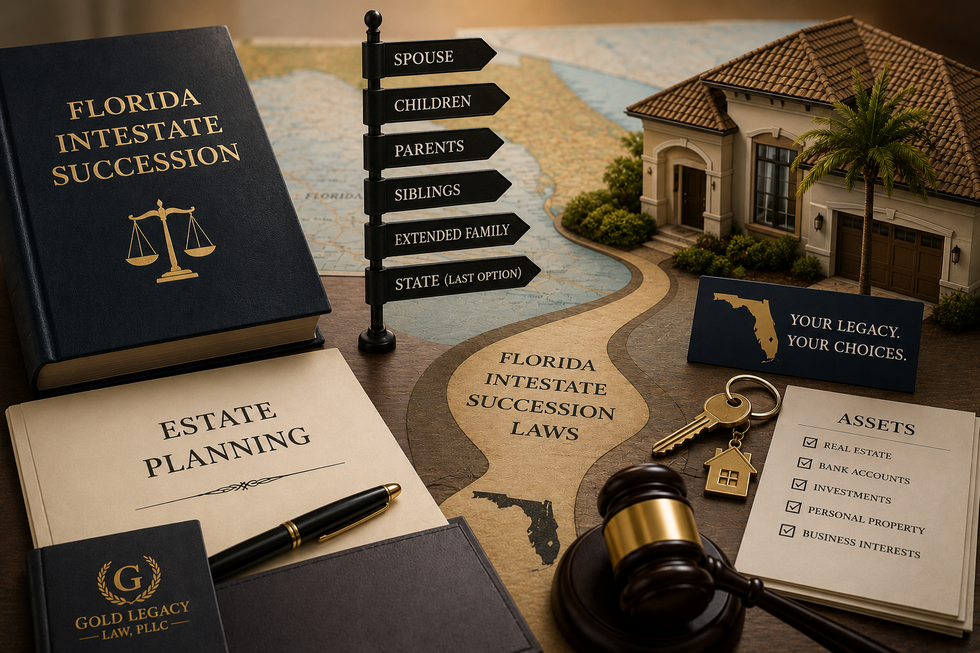
When a Florida resident dies without a valid will, their estate is distributed according to Florida's intestate succession laws found in Chapter 732 of the Florida Statutes.
Rather than allowing the state to inherit immediately, Florida law creates a hierarchy of relatives who may receive the deceased person's assets.
Generally, inheritance follows this order:
Surviving Spouse
In many cases, the surviving spouse receives all or a significant portion of the estate.
The exact amount depends on factors such as:
- Whether the decedent had children
- Whether those children are shared with the surviving spouse
- Whether either spouse has children from prior relationships
Children and Descendants
If there is no surviving spouse, the estate typically passes to the decedent's children.
If a child has predeceased the decedent, that child's share may pass to their descendants, such as grandchildren.
Parents
If there is no spouse or descendants, the estate generally passes to the decedent's parents.
Siblings and Extended Family
If the parents are deceased, inheritance may pass to:
- Brothers and sisters
- Nieces and nephews
- Grandparents
- Aunts and uncles
- Cousins
Florida law goes surprisingly far in locating heirs before considering whether assets should pass elsewhere.
When Does the State Actually Receive an Estate?
The state only receives an estate in very rare circumstances.
This legal concept is called escheat.
Escheat occurs when:
- The deceased person dies without a will;
- No legally recognized heirs can be identified; and
- Extensive efforts have been made to locate family members.
Only after the probate court determines there are no eligible heirs under Florida law will the remaining assets pass to the State of Florida.
In my years of practice, this is an uncommon outcome. Most people have at least one relative who qualifies as an heir under Florida's intestate succession statutes.
Problems Created by Dying Without a Will
Even though the state usually does not inherit your assets, dying without a will can still create significant challenges for your family.
Some common problems include:
Loss of Control
You lose the ability to decide who receives your assets.
Florida law, not you, determines who inherits.
Family Disputes
Probate disputes often arise when family members disagree about who should inherit or who should serve as personal representative.
Delays in Probate
Without clear instructions, probate administration can take longer and become more expensive.
Unintended Beneficiaries
Certain relatives may inherit assets even if you never intended for them to receive anything.
Minor Children
If you have minor children, a will allows you to nominate a guardian. Without one, the court may be forced to make that decision.
Estate Planning Helps Protect Your Family
A properly drafted estate plan gives you control over your legacy.
Depending on your goals, your estate plan may include:
- A Last Will and Testament
- Revocable Living Trust
- Durable Power of Attorney
- Healthcare Surrogate Designation
- Living Will
- Beneficiary Designations
- Asset Protection Planning
These tools allow you to direct where your assets go, minimize potential disputes, and make the administration process easier for your loved ones.
Final Thoughts
While Florida law does not automatically give your inheritance to the state if you die without a will, relying on intestate succession is rarely the best option. The state only inherits property when no heirs can be located, which is uncommon. However, dying without a will can still create uncertainty, delays, and unnecessary stress for your family.
As an estate planning and probate attorney serving Miami Lakes and families throughout South Florida, I believe one of the greatest gifts you can leave your loved ones is clarity. A comprehensive estate plan ensures your wishes, not Florida's default inheritance laws, determine what happens to your assets.
If you have questions about wills, trusts, probate administration, or protecting your family's legacy, contact Gold Legacy Law, PLLC to discuss your options.
Disclaimer: This article is provided for informational purposes only and does not constitute legal advice. Reading this content does not create an attorney-client relationship between you and Gold Legacy Law. For legal advice regarding your personal situation, please contact our office to schedule a consultation.

Comments
There are no comments for this post. Be the first and Add your Comment below.
Leave a Comment