
When someone passes away in Florida, their estate must be fully disclosed and valued for probate. But what happens when part of that estate is digital—like Bitcoin, NFTs, or other cryptocurrency—and no one knows where it is?
As more Floridians invest in crypto and online assets, disputes over hidden or undisclosed digital wealth are rising in Broward County probate courts. The good news? You can compel disclosure—but doing so requires specialized legal strategy, subpoenas, and digital forensics.
A Broward probate litigation attorney can help uncover and account for digital assets that may have been intentionally concealed or accidentally omitted from an estate.
Florida Probate and Digital Assets
Florida's probate laws require that all assets owned by the decedent—from real estate to crypto wallets—be disclosed to the court and beneficiaries.
Under Florida Statute §733.602, the personal representative (executor) must locate, inventory, and value all estate property. Failure to do so can lead to legal liability and removal from office.
The challenge with crypto is that it's decentralized and often anonymous. Without private keys, even the court can't access those funds. But if you suspect digital assets exist, you can act to compel disclosure.
How Digital Assets Can Be Hidden
-
Private Wallets: Crypto stored on personal hardware (like a Ledger or Trezor) may not appear in bank statements.
-
Exchange Accounts: Digital currencies held in Coinbase, Binance, or Kraken accounts may go unnoticed without subpoena.
-
NFTs and Online Investments: Art NFTs, gaming tokens, or digital real estate can be easily transferred or concealed online.
-
Digital Payment Apps: PayPal, Venmo, or CashApp balances are also part of the estate.
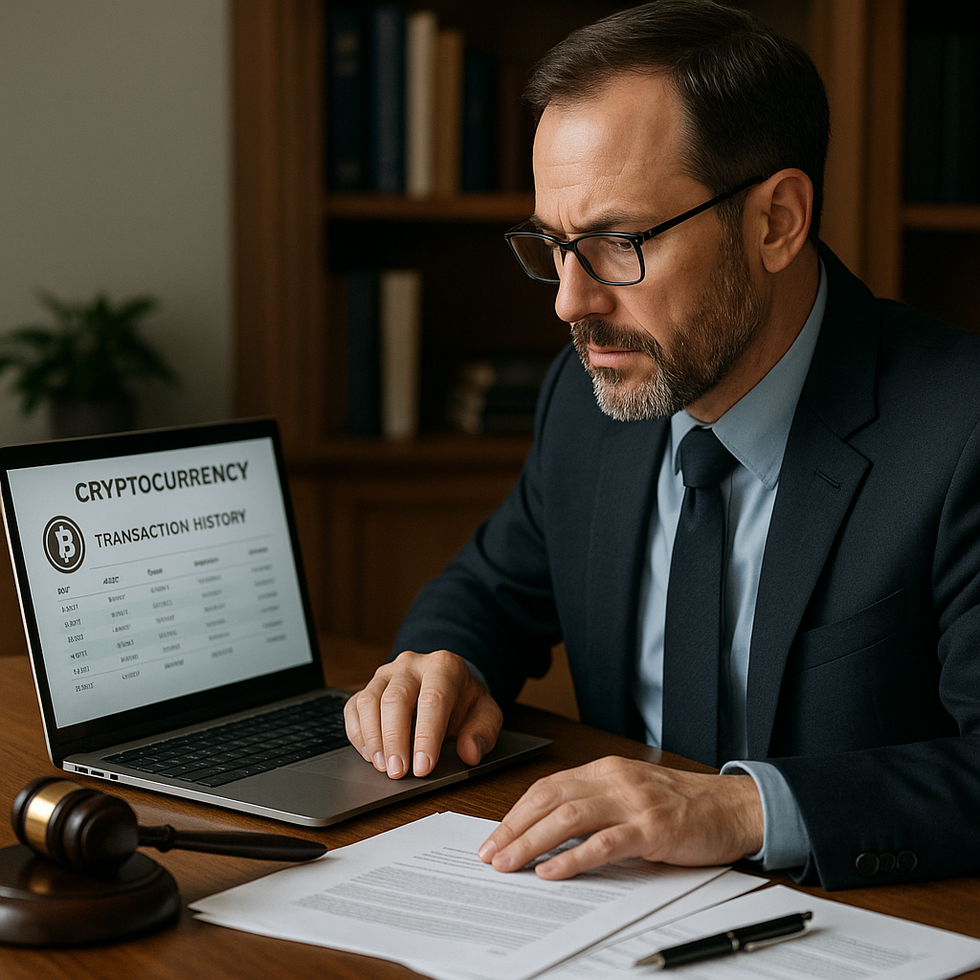 Broward probate litigation attorney analyzing cryptocurrency records during estate dispute.
Legal Tools to Force Disclosure
If you believe an executor or heir is hiding digital assets, Florida probate law provides remedies:
-
Formal Discovery Requests
-
File motions to compel production of financial statements, digital account lists, or transaction logs.
-
-
Subpoenas to Exchanges and Platforms
-
Courts can issue subpoenas to crypto exchanges for records tied to the decedent's name, email, or IP address.
-
-
Forensic Accounting and Blockchain Tracing
-
Expert crypto forensic analysts can track transactions on the blockchain to uncover hidden wallets or transfers.
-
-
Petition for Accounting or Removal of Personal Representative
-
If a personal representative fails to disclose crypto holdings, the court can order their removal under Florida Statute §733.504.
-
Challenges in Crypto Probate Cases
-
Anonymity: Without wallet keys, recovery is nearly impossible.
-
Jurisdictional Issues: Some exchanges are offshore and noncompliant with Florida subpoenas.
-
Volatility: The fluctuating value of crypto complicates asset valuation and equitable distribution.
The Role of a Broward Probate Litigation Attorney
An experienced attorney can:
-
File petitions to compel discovery of digital assets.
-
Work with forensic experts to trace transactions.
-
Enforce fiduciary duties and hold executors accountable.
-
Ensure digital holdings are included in the estate inventory for fair distribution.
Final Thoughts
Yes, you can force disclosure of crypto and digital assets in Florida probate, but it requires precision, technical understanding, and aggressive legal action.
If you suspect hidden crypto assets in a Broward County estate, consult a Broward probate litigation attorney who understands both blockchain and Florida probate law.
Disclaimer: This article is provided for informational purposes only and does not constitute legal advice. Reading this content does not create an attorney-client relationship between you and Gold Legacy Law. For legal advice regarding your personal situation, please contact our office to schedule a consultation.
