
Florida homestead property is one of the most protected asset classes under Florida law. However, many families are surprised to learn that even though homestead property may be protected from creditors, probate proceedings are still often necessary before the property can be sold.
As a Miami Lakes trust attorney, I regularly advise families dealing with Florida probate and homestead issues that the sale of homestead property depends on several important legal factors. Understanding these rules is essential to avoiding title problems, delays, and unnecessary disputes among heirs.
What Is Florida Homestead Property?
Under the Florida Constitution, homestead property generally refers to a person's primary residence that qualifies for constitutional protections.
Florida homestead protections may provide:
- Protection from certain creditor claims
- Property tax benefits
- Restrictions on devise upon death
To qualify as protected homestead, the property generally must be:
- Owned by a natural person
- The decedent's primary residence
- Located within Florida constitutional acreage limitations
These protections continue to create legal significance even after death.
Can Homestead Property Be Sold During Probate?
Yes, Florida homestead property can often be sold during probate.
However, before a sale can occur, several legal issues typically must be addressed.
These may include:
- Determining whether the property qualifies as homestead
- Identifying the rightful heirs or beneficiaries
- Establishing clear title
- Resolving any disputes regarding inheritance rights
Even though homestead property is generally exempt from creditor claims, title companies and buyers frequently require probate court orders confirming ownership before closing.
Why Probate Is Often Still Required
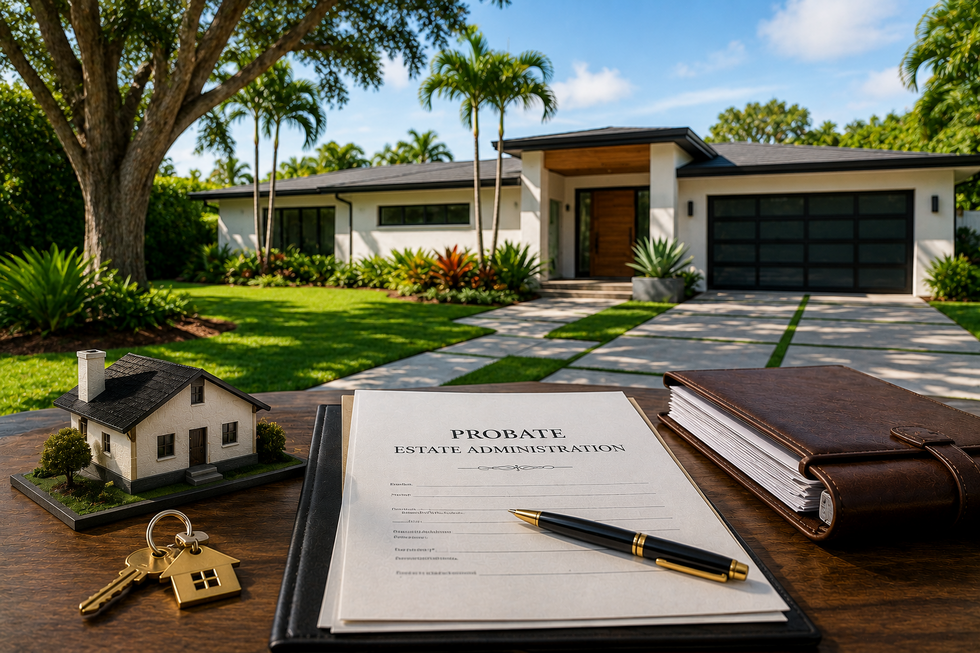
One of the most common misconceptions is that Florida homestead property completely avoids probate.
While protected homestead property is generally not considered a probate asset under Florida Statute §733.607, probate proceedings are still commonly necessary to formally determine homestead status and establish the legal heirs.
This is important because:
1. Title Companies Often Require Probate Orders
Most title underwriters want a court order confirming homestead status and ownership before issuing title insurance.
2. The Court Clarifies Heirship
Probate proceedings help establish who legally inherited the property.
3. Homestead Rights Must Be Protected
Special protections exist for surviving spouses and minor children under Florida law.
Without proper probate documentation, the sale process can become delayed or complicated.
What Happens if There Is a Surviving Spouse or Minor Child?
Florida homestead law becomes more complex when the decedent is survived by a spouse or minor child.
Under Article X, Section 4 of the Florida Constitution:
- Homestead property generally cannot be freely devised if the decedent is survived by a spouse or minor child
- Special inheritance rights may apply
- The surviving spouse may receive a protected interest in the property
For example, the surviving spouse may receive:
- A life estate interest
- Or an elective one-half interest as tenants in common with descendants
These issues may directly affect whether the property can immediately be sold.
Can the Personal Representative Sell the Property?
In many situations, homestead property passes directly to the heirs upon death.
Because of this, the personal representative may not automatically have authority to sell the property unless:
- The will authorizes the sale
- The heirs consent
- Court approval is obtained when necessary
The answer depends on how title vested at death and the specific circumstances of the estate.
Common Probate Problems Involving Homestead Property
Several issues commonly delay homestead sales during probate.
Out-of-State Estate Plans
Documents prepared outside Florida may conflict with Florida homestead law.
DIY Deeds
Improper deed transfers may create title defects and creditor concerns.
Blended Families
Second marriages combined with children from prior relationships often create inheritance disputes.
Minor Children
Homestead restrictions become significantly more complicated when minor children are involved.
Failure to Open Probate Promptly
Delays can create title problems and increase disputes among heirs.
The Importance of Proper Estate Planning
Florida homestead law is highly technical and should be carefully coordinated with:
- Wills
- Trusts
- Deeds
- Probate planning strategies
At Gold Legacy Law, PLLC, I work with families throughout Miami Lakes and South Florida to create estate plans designed to minimize probate complications while preserving homestead protections under Florida law.
Careful planning today can significantly reduce future legal issues for surviving family members.
Final Thoughts
Yes, homestead property can often be sold during probate in Florida, but the process is rarely as straightforward as families expect.
Before a sale occurs, it is important to properly determine homestead status, ownership rights, and title issues to avoid delays and disputes.
Understanding Florida homestead law and obtaining proper legal guidance can help families navigate probate more efficiently while protecting the value of the estate. If you need assistance selling homestead property after the death of a loved one, call us today at 305-556-5209.
Disclaimer: This article is provided for informational purposes only and does not constitute legal advice. Reading this content does not create an attorney-client relationship between you and Gold Legacy Law. For legal advice regarding your personal situation, please contact our office to schedule a consultation.

Comments
There are no comments for this post. Be the first and Add your Comment below.
Leave a Comment