
When a new will appears late in life, especially where a caregiver or one child benefits at the expense of others, families in Broward County often ask the same question: Was this the decedent's true intent, or someone else's influence? In Florida, a will (or any part of it) is void if it was procured by undue influence (or by fraud, duress, or mistake).
What is “undue influence” under Florida law?
Florida courts look for active procurement of the will by a substantial beneficiary in a confidential relationship with the decedent. The Florida Supreme Court's seminal decision, In re Estate of Carpenter (1971), identified classic “Carpenter factors,” such as the beneficiary's presence at execution, securing witnesses, safekeeping the will, and isolating the testator from family. These factors help courts decide whether a presumption of undue influence should arise.
How the burden of proof works
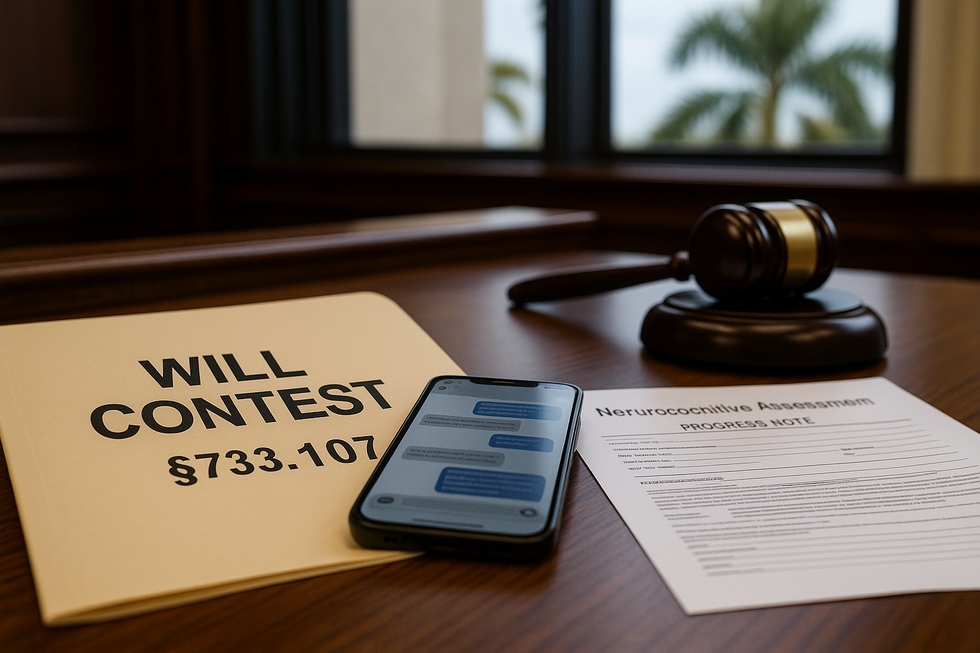
In a will contest, the proponent must first show formal execution. If the challenger proves a confidential relationship and active procurement, the presumption of undue influence shifts the burden to the will's proponent to show the will was not the product of undue influence. This burden-shifting framework is codified in Fla. Stat. §733.107.
Deadline alert: After you're served with a Notice of Administration, you generally have three months to file will challenges like undue influence. Miss it and you can be barred. Move quickly to preserve your rights.
What evidence wins
From our Broward probate cases, these categories often tip the scales:
-
Medical records & capacity timeline. Cognitive evaluations, physician notes, and medication logs help show vulnerability or susceptibility to influence on or near the signing date.
-
Texts, emails, and call logs. Digital messages can reveal isolation (“Don't tell your sister”), funneling of information, or orchestration of attorney meetings.
-
Caregiver/payment records. Sudden control over appointments, finances, or living arrangements can map onto Carpenter factors.
-
Drafting-lawyer file. Intake notes, who called to schedule, who gave instructions, and who was present at execution are critical.
-
Witness testimony. Neighbors, aides, and bank personnel often corroborate changes in routine or control.
Together with the Carpenter factors and §733.107's presumption rules, this evidence builds (or rebuts) the case that the document reflects someone else's will, not the decedent's.
Remedies the court can order
If undue influence is proven, the tainted will, or the tainted portion is void, while the remainder can stand if otherwise valid. The estate then passes under a prior will or by intestacy. Florida's statute speaks expressly to partial invalidity and also voids any revocation procured by undue influence.
Practical tips for families in Broward
-
Act fast. Diary the three-month window the day the Notice of Administration is served.
-
Preserve devices and paper trails. Don't wipe phones; collect texts, emails, and calendars immediately.
-
Request the lawyer's file early. It's central to active procurement and witness issues.
-
Mind local practice. Use Broward's current probate checklists and filing requirements to avoid delay.
-
Consider related claims. Deeds, beneficiary changes, and pay-on-death designations can be challenged under parallel undue-influence theories even outside the will.
Bottom line: In Broward County probate litigation, undue influence turns on timelines, relationships, and details. A focused early investigation, paired with the Carpenter factors and Florida's burden-shifting statute often decides whether the will stands or falls.
Disclaimer: This article is provided for informational purposes only and does not constitute legal advice. Reading this content does not create an attorney-client relationship between you and Gold Legacy Law. For legal advice regarding your personal situation, please contact our office to schedule a consultation.
