
Creating an estate plan is one of the most responsible and loving things you can do for your family. But a surprising number of people make costly mistakes that can undermine their intentions and create chaos after they're gone.
As an estate planning attorney in Miami, Florida, I see the same critical missteps over and over again. Here are seven estate planning mistakes to avoid—and how to do it right.
1. Not Having an Estate Plan
Let's start with the most dangerous mistake: doing nothing at all.
If you pass away without a will or trust in Florida, your estate will be distributed under the state's intestacy laws. That means:
-
No say in who receives your assets
-
No control over guardianship for minor children
-
No opportunity to minimize taxes or avoid probate
Even a basic will is better than none—but a full estate plan offers real protection.
2. Relying Solely on a Will
Many people assume that a will is enough. It's not.
A will doesn't avoid probate. Your assets will still go through a court-supervised process that can take months (or years), incur hefty fees, and be open to the public.
The better option? A revocable living trust. This keeps your estate private, avoids probate, and provides a seamless transition of your assets.
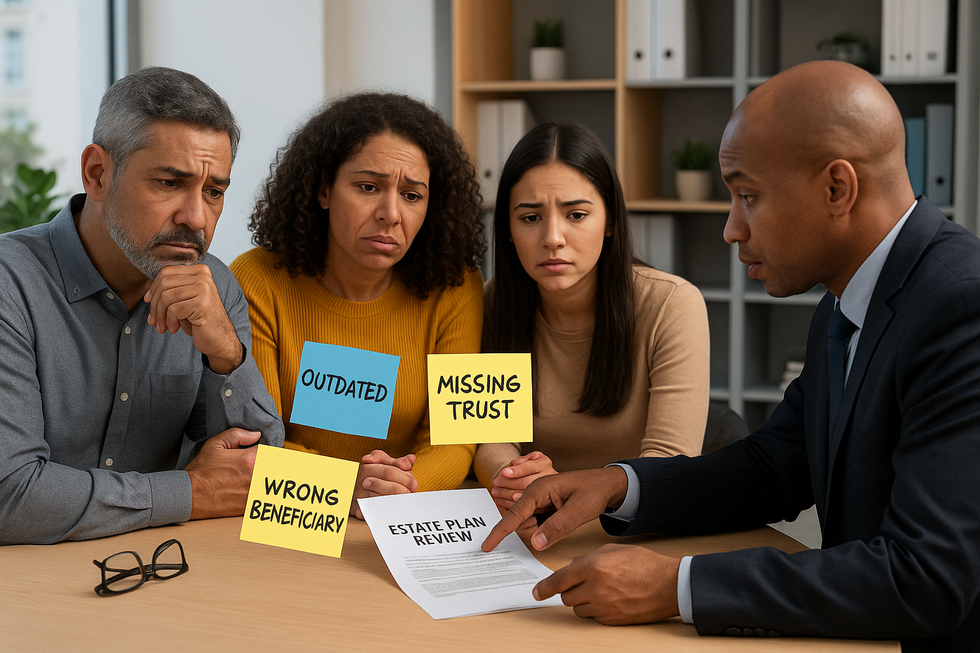
3. Failing to Update Your Plan
Life changes. Your estate plan should, too.
If you've had a:
-
Divorce or remarriage
-
New child or grandchild
-
Death of a beneficiary or executor
-
Major move or financial shift
…it's time to revisit your documents. Outdated plans can send assets to ex-spouses or exclude new family members entirely.
4. Ignoring Digital Assets
Cryptocurrency. Cloud accounts. Social media. Email. These digital assets are often forgotten—but they matter.
Without proper documentation and authority, your executor may not be able to access:
-
Crypto wallets and passwords
-
Google Drive or Dropbox accounts
-
Subscription services or online banking
-
Domain names or monetized YouTube channels
Florida's RUFADAA law allows you to legally designate digital access—but only if your estate plan says so.
5. Choosing the Wrong People
A poor choice of executor, trustee, or guardian can unravel everything.
Don't default to your oldest child or closest sibling. Look for someone who is:
-
Organized
-
Trustworthy
-
Emotionally steady
-
Available when needed
Choosing the wrong fiduciary can lead to family tension, missed deadlines, or even litigation.
6. No Planning for Incapacity
Estate planning isn't just about death—it's also about disability or incapacity.
Without a durable power of attorney, healthcare surrogate, and living will, your family may need court approval just to:
-
Pay your bills
-
Manage accounts
-
Make medical decisions
These simple documents prevent costly and avoidable guardianship proceedings.
7. Using DIY or Outdated Documents
Online legal templates may seem convenient, but they often:
-
Don't comply with Florida law
-
Lack important clauses
-
Don't include notarization or witness requirements
-
Fail to reflect your unique family or assets
Worse, many plans haven't been updated since the last major legal change—leaving you exposed.
Protect Your Legacy with Confidence
At Gold Legacy Law in Miami, we help Florida families avoid these estate planning mistakes every day. Whether you're starting from scratch or updating a dusty binder, we create custom, compliant, and complete plans that reflect your values.
Ready to protect your future the right way?
Schedule a consultation today—we'll make sure your plan works when your family needs it most.
Disclaimer: This article is provided for informational purposes only and does not constitute legal advice. Reading this content does not create an attorney-client relationship between you and Gold Legacy Law. For legal advice regarding your personal situation, please contact our office to schedule a consultation.
